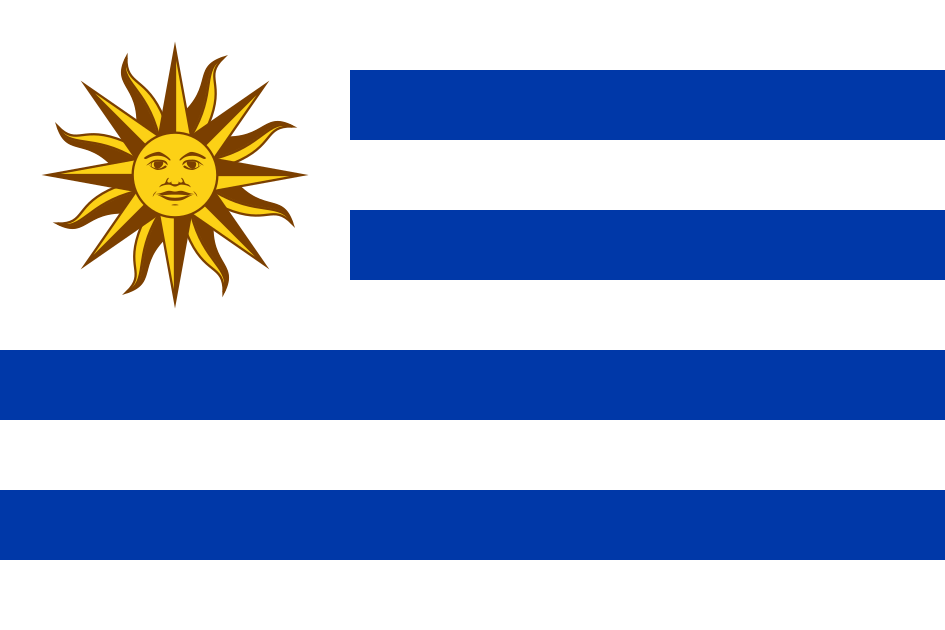
Uruguay
Oriental Republic of Uruguay
Current Population (Live)
Annual Growth Rate: -0.04%
Situated in South America, Uruguay has a population of approximately 3.39 million—a modestly sized nation in population terms. The country extends across 181,034 km², translating to a density of 19 people per km². Its capital is Montevideo, and Spanish is the official language, while the Uruguayan peso serves as the national currency.
Population
3,386,588
Area
181,034 km²
Density
19/km²
World Rank
#134
Population Trend (1960-2050)
Historical data from 1960 to present with projections to 2050.
Annual Growth Rate by Period
The population is currently contracting at a rate of -0% per year, pointing to deep structural challenges such as low birth rates and emigration. Deaths (9.9 per thousand) now equal or exceed births (9.8 per thousand), resulting in natural population decline. The population skews older, with 16.1% aged 65 or above and 18.3% under 15, signaling rising dependency ratios.
General Information
- Capital
- Montevideo
- Region
- Americas
- Subregion
- South America
- Continent
- South America
- Languages
- Spanish
- Currencies
- Uruguayan peso ($)
- Calling Code
- +598
- Top-Level Domain
- .uy
- Landlocked
- No
- UN Member
- Yes
- Timezones
- UTC-03:00
Population Details
- Total Population
- 3,386,588
- Land Area
- 181,034 km²
- Population Density
- 19 per km²
- Annual Growth Rate
- -0.04%
- Annual Growth
- -1,355 people
- Daily Growth
- -4 people
- World Population Share
- 0.04%
- Coordinates
- -33.00°, -56.00°
Global Population Share
Demographics & Economy
With a GDP per capita of roughly $23.9k, Uruguay sits comfortably in the high-income bracket by World Bank standards. Unemployment sits at 7.5%, above the global average of 5.8%. The Gini index of 40.0 indicates a moderate level of income inequality.
Life Expectancy
78.3 years
GDP per Capita
$23,907
Birth Rate
9.8 per 1,000
Death Rate
9.9 per 1,000
Urban Population
95.6%
Fertility Rate
1.40 births/woman
Infant Mortality
6.2 per 1,000
Unemployment
7.5%
Literacy Rate
98.9%
Internet Users
92.0%
Under 15
18.3%
Over 65
16.1%
Health Spending
9.0% GDP
Gini Index
40.0
Age Distribution
0-14 years
619K
15-64 years
2.2M
65+ years
544K
Urbanization
Uruguay is overwhelmingly urban: an estimated 95.6% of the population lives in cities, one of the highest rates in the world. Montevideo serves as the administrative heart of the country and concentrates much of its commercial and civic life. Net emigration of 1338.0 per thousand is thinning rural areas in particular, accelerating the concentration of population in cities.
3.2M
95.6%
149,010
4.4%
Health & Education Indicators
Average life expectancy of 78.3 years is roughly in line with the global benchmark of 72.8. Infant mortality stands at 6.2 per thousand live births, significantly higher than the global average. The literacy rate of 98.9% is roughly in line with the world average, reflecting the current state of educational investment.
Life Expectancy
World avg: 72.8
Fertility Rate
World avg: 2.3
Infant Mortality
World avg: 27.5
Literacy Rate
World avg: 86.7
Internet Users
World avg: 63
Major Cities in Uruguay
Uruguay has 1 cities with a population over 100,000. Click on markers to see details.
Population Projections (2026-2050)
If current trends persist, Uruguay's population will continue to shrink, intensifying labor shortages and increasing the burden on pension and healthcare systems. With 16.1% of the population already over 65, the aging challenge is likely to deepen in the decades ahead. As a United Nations member state, Uruguay participates in global discussions on sustainable development that will shape its demographic future.
| Year | Projected Population |
|---|---|
| 2026 | 3,386,588 |
| 2030 | 3,379,597 |
| 2035 | 3,367,684 |
| 2040 | 3,352,744 |
| 2045 | 3,335,249 |
| 2050 | 3,315,608 |
Population History (1960-2026)
Year-by-year population data, growth rates, and trends for Uruguay.
Largest Cities in Uruguay
Explore the biggest cities and urban centers in Uruguay by population.
Uruguay Crime Rate & Safety
Homicide statistics, crime trends, and travel safety information for Uruguay.
Neighboring Countries


Frequently Asked Questions
What is the population of Uruguay?
The population of Uruguay is approximately 3.4 million as of 2026, making it #134 in the world by population.
What is the capital of Uruguay?
The capital of Uruguay is Montevideo.
What languages are spoken in Uruguay?
The main languages spoken in Uruguay are Spanish.
How big is Uruguay?
Uruguay covers an area of 181,034 km² with a population density of 19 people per km².
Is Uruguay growing or shrinking?
Uruguay's population is declining at a rate of -0.04% per year.
What is the life expectancy in Uruguay?
The average life expectancy in Uruguay is 78.3 years.
What is the GDP per capita of Uruguay?
The GDP per capita of Uruguay is $23,907.