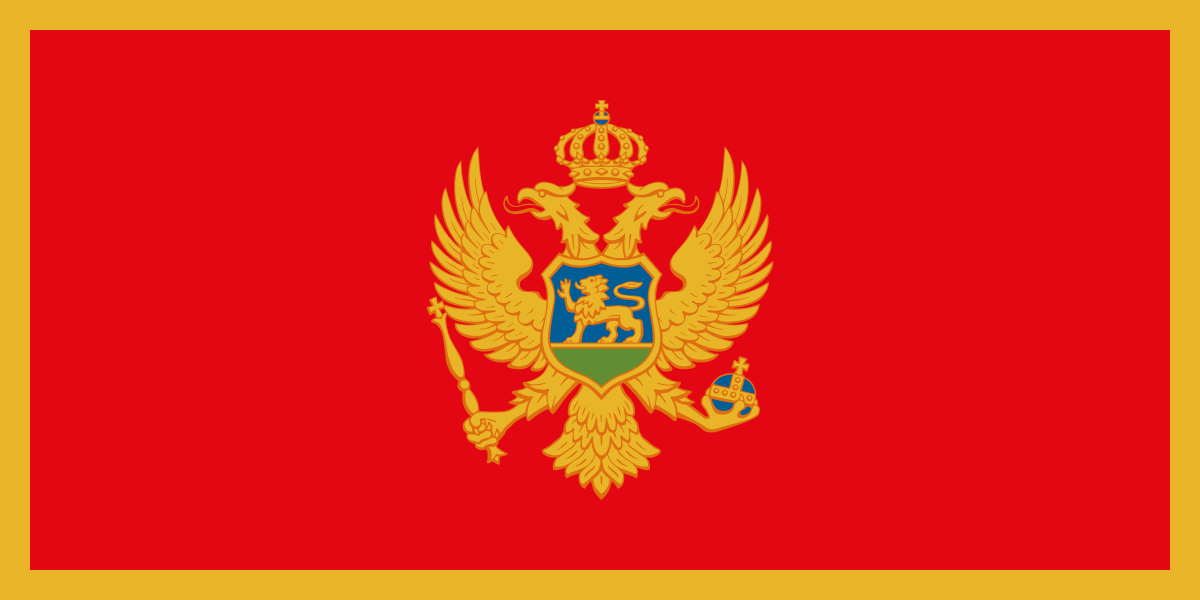
Montenegro
Montenegro
Current Population (Live)
Annual Growth Rate: +0.00%
Situated in Southeast Europe, Montenegro has a population of approximately 623.5k—a modestly sized nation in population terms. The country extends across 13,812 km², translating to a density of 45 people per km². Its capital is Podgorica, and Montenegrin is the official language, while the euro serves as the national currency.
Population
623,525
Area
13,812 km²
Density
45/km²
World Rank
#171
Population Trend (1960-2050)
Historical data from 1960 to present with projections to 2050.
Annual Growth Rate by Period
Population growth has effectively stalled at 0% annually, suggesting the country is approaching or has reached a demographic plateau. The gap between the birth rate (11.2 per thousand) and death rate (10.2 per thousand) has narrowed considerably. The population skews older, with 17.8% aged 65 or above and 18.1% under 15, signaling rising dependency ratios.
General Information
- Capital
- Podgorica
- Region
- Europe
- Subregion
- Southeast Europe
- Continent
- Europe
- Languages
- Montenegrin
- Currencies
- euro (€)
- Calling Code
- +382
- Top-Level Domain
- .me
- Landlocked
- No
- UN Member
- Yes
- Timezones
- UTC+01:00
Population Details
- Total Population
- 623,525
- Land Area
- 13,812 km²
- Population Density
- 45 per km²
- Annual Growth Rate
- +0.00%
- Annual Growth
- +-0 people
- Daily Growth
- +-0 people
- World Population Share
- 0.01%
- Coordinates
- 42.50°, 19.30°
Global Population Share
Demographics & Economy
GDP per capita stands at approximately $13.3k, placing the economy in the upper-middle-income category—roughly in line with the global average of $12.5k. Unemployment sits at 13.6%, well above the global average of 5.8%. The Gini index of 34.3 indicates a moderate level of income inequality.
Life Expectancy
77.9 years
GDP per Capita
$13,263
Birth Rate
11.2 per 1,000
Death Rate
10.2 per 1,000
Urban Population
65.5%
Fertility Rate
1.80 births/woman
Infant Mortality
1.9 per 1,000
Unemployment
13.6%
Literacy Rate
98.5%
Internet Users
88.9%
Under 15
18.1%
Over 65
17.8%
Health Spending
9.7% GDP
Gini Index
34.3
Age Distribution
0-14 years
113K
15-64 years
399K
65+ years
111K
Urbanization
Urbanization is well advanced, with roughly 65.5% of the population residing in towns and cities, above the global mean of 56%. Podgorica serves as the administrative heart of the country and concentrates much of its commercial and civic life. Net emigration of 9279.0 per thousand is thinning rural areas in particular, accelerating the concentration of population in cities.
408,658
65.5%
214,867
34.5%
Health & Education Indicators
Average life expectancy of 77.9 years is roughly in line with the global benchmark of 72.8. Infant mortality is remarkably low at 1.9 per thousand live births, indicative of high-quality maternal and neonatal care. The literacy rate of 98.5% is roughly in line with the world average, reflecting the current state of educational investment.
Life Expectancy
World avg: 72.8
Fertility Rate
World avg: 2.3
Infant Mortality
World avg: 27.5
Literacy Rate
World avg: 86.7
Internet Users
World avg: 63
Major Cities in Montenegro
Montenegro has 1 cities with a population over 100,000. Click on markers to see details.
Population Projections (2026-2050)
Near-zero growth suggests that Montenegro is entering a period of demographic stability—or, depending on policy responses, the early stages of decline. Below-replacement fertility of 1.8 births per woman means natural growth alone cannot sustain the current population level indefinitely. As a United Nations member state, Montenegro participates in global discussions on sustainable development that will shape its demographic future.
| Year | Projected Population |
|---|---|
| 2026 | 623,525 |
| 2030 | 624,978 |
| 2035 | 629,774 |
| 2040 | 637,508 |
| 2045 | 647,867 |
| 2050 | 660,609 |
Population History (1960-2026)
Year-by-year population data, growth rates, and trends for Montenegro.
Largest Cities in Montenegro
Explore the biggest cities and urban centers in Montenegro by population.
Montenegro Crime Rate & Safety
Homicide statistics, crime trends, and travel safety information for Montenegro.
Neighboring Countries


Frequently Asked Questions
What is the population of Montenegro?
The population of Montenegro is approximately 623,525 as of 2026, making it #171 in the world by population.
What is the capital of Montenegro?
The capital of Montenegro is Podgorica.
What languages are spoken in Montenegro?
The main languages spoken in Montenegro are Montenegrin.
How big is Montenegro?
Montenegro covers an area of 13,812 km² with a population density of 45 people per km².
Is Montenegro growing or shrinking?
Montenegro is growing at a rate of 0.00% per year, adding approximately -0 people annually.
What is the life expectancy in Montenegro?
The average life expectancy in Montenegro is 77.9 years.
What is the GDP per capita of Montenegro?
The GDP per capita of Montenegro is $13,263.