
Ethiopia Crime Rate & Safety
Homicide statistics, crime trends, and travel safety for Ethiopia
Ethiopia recorded 8.5 intentional homicides per 100,000 people in 2012, a rate that is high by global standards. That places Ethiopia #46 of 195 countries by homicide rate, compared with the Africa average of 7.6 per 100,000 and a world average of 5.2. For travelers, the US State Department currently rates Ethiopia at Level 3 of 4: Reconsider Travel.
Homicide Rate
8.5 /100k
Safety Rank
#150 of 195
Travel Advisory
Level 3 of 4
Data Year
2012
Homicide Rate Trend (2012-2012)
Intentional homicides per 100,000 people. Source: UNODC via World Bank.
How Ethiopia Compares
Intentional homicides per 100,000 people, latest available year per country.
Armed Conflict Context
Ethiopia has recorded battle-related deaths in recent years. Conflict deaths are counted separately from homicides — a country can have a moderate crime rate but significant conflict risk, and travel advisories weigh both.
Battle-Related Deaths
2,824(2024)
Military Spending
0.7% GDP(2024)
Safety for Travelers
Summary of the current US State Department advisory for Ethiopia:
There was no change to the advisory level. The "other" risk indicator was updated to include exit bans and communication disruptions. The advisory summary was updated. Reconsider travel to Ethiopia due to unrest, crime, kidnapping, terrorism, landmines, communications disruptions, and exit bans. Some areas have increased risk. Read the entire Travel Advisory. Do Not Travel To: Tigray region and border with Eritrea due to armed conflict, unrest, and crime. Afar region due to armed conflict, unrest, and crime. Amhara region due to armed conflict, unrest, and crime.
Level 1
Exercise Normal Precautions
Level 2
Exercise Increased Caution
Level 3
Reconsider Travel
Level 4
Do Not Travel
Safety Guidance for Ethiopia
Practical safety information for visitors, from US State Department country information (last updated August 21, 2023).
Terrorism
Al-Qa’ida and its regional affiliate, Somalia-based al-Shabaab, maintain a presence throughout East Africa. In late 2020, Ethiopian security officials announced the arrest of al-Shabaab and ISIS members who were accused of planning attacks in Addis Ababa and other parts of Ethiopia. Current information indicates that terrorist organizations continue to plan terrorist attacks against U.S. citizens and Western targets and interests in East Africa, as well as against high-profile targets within those countries that contribute troops to the African Union Mission in Somalia, including Ethiopia. Terrorist groups and those inspired by such organizations are intent on attacking U.S. citizens abroad. Terrorists are increasingly using less sophisticated methods of attack – including knives, firearms, and vehicles – to more effectively target crowds.
Civil Unrest
Ethiopia has experienced sporadic and spontaneous civil unrest throughout the country, some of which has ended in violence. During such episodes, the Ethiopian government often curtails or limits mobile telecommunications, internet access, and social media. If this happens, you may be unable to contact family and friends or emergency services. The U.S. Embassy does not provide internet access to private individuals. U.S. government personnel must request permission for personal and official travel outside of Addis Ababa and are required to carry personnel tracking devices and, in some cases, satellite phones. U.S. government personnel may not take personal trips to: All national border regions of Ethiopia Gambella (except Gambella City) Benishangul Gumuz (except Assosa City) Some areas in western and southern parts of Oromia region Tigray region Amhara region U.S.
Western areas of Oromia
Wollega zones that include Kellem Wollega, West Wollega, Horro-Guduru Wollega and parts of East Wollega have reported civil unrest including fighting involving armed groups.
Southern areas of Oromia
West Guji zone has reported civil unrest including fighting involving armed groups.
Border with Kenya
There have been numerous incidents of inter-ethnic conflict reported near the border areas with Kenya, as well as attacks attributed to the Oromo Liberation Army (OLA or OLF-Shane). Criminal activity in this border area remains a concern.
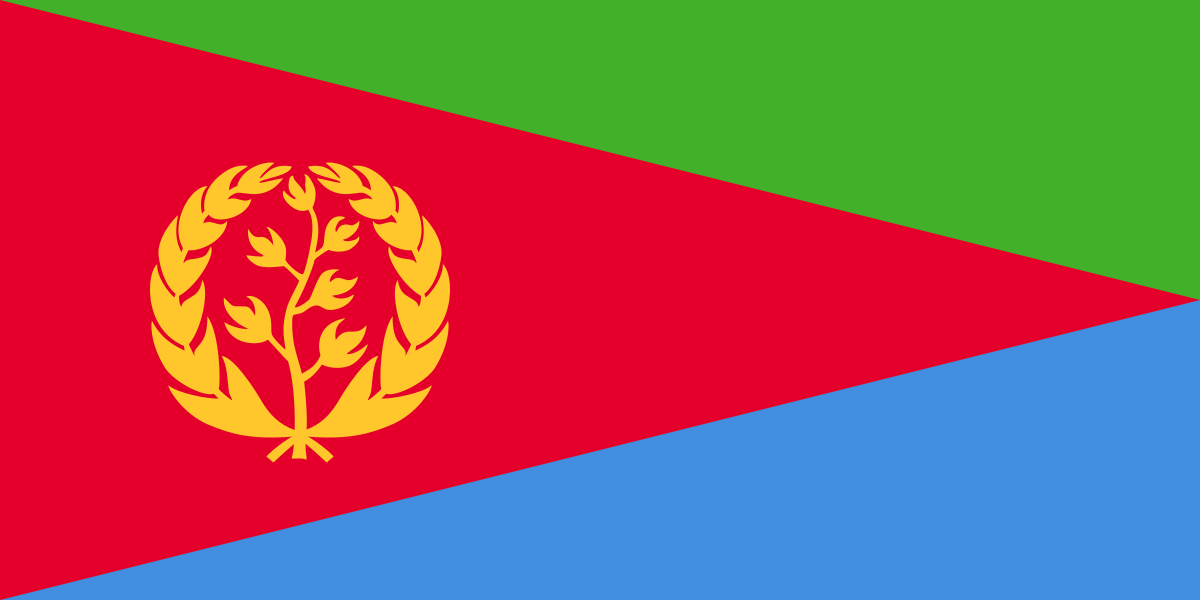
Tigray and Border with Eritrea
Due to conflict in the region, Tigray and the border with Eritrea are currently off-limits for U.S. government personnel. Due to the current situation in Tigray, the border roads with Eritrea are closed. Conditions at the border may change with no warning.
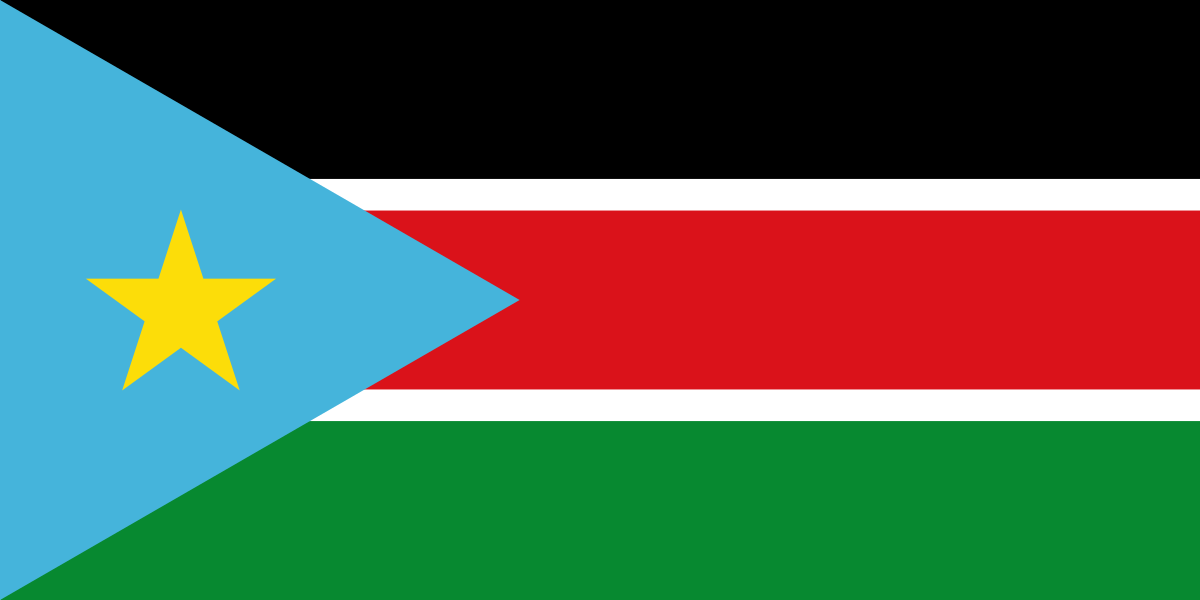
Border with South Sudan (Gambella Region)
The security situation in the region is volatile. Sporadic inter-ethnic clashes are common along the western border area with South Sudan. Past tribal conflict between Anyuak, Nuer, and Highlanders resulted in numerous casualties. As with other border areas, landmines and criminal activity remain a concern.
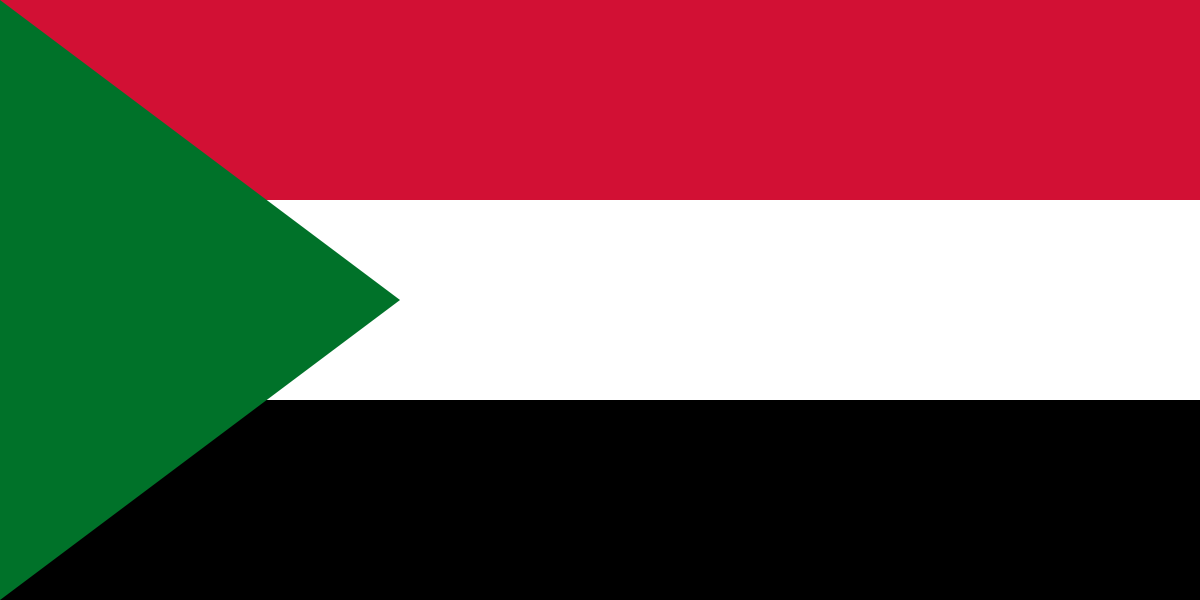
Border with Sudan
There have been numerous incidents of armed clashes reported near the border area between Sudan and Ethiopia over disputed land.
Somali Region (eastern Ethiopia)
Al-Shabaab maintains a presence in Somali towns near the Ethiopian border, presenting risk of cross-border attacks and kidnapping. As with other border areas, landmines and criminal activity remain a concern. U.S. government personnel may not take personal trips to the Somali region.
Afar
Violent crime, including the armed assault of foreigners, has occurred in the Danakil Depression in Afar. While recent reports may indicate the Danakil Depression area is safe for tourism, please note that tourism was previously targeted for attacks in 2007, 2012, and 2017. It is not recommended to use the Mekelle route to this or other tourist sites in the Afar region due to the current situation in the Tigray region. Travelers should remain alert for changing conditions and the potential for criminal activity in these areas. Travel to areas bordering Tigray is not recommended due to conflict in that region. Additionally, ethnic conflicts between Afar and Somalis in the southern border areas of Afar have been reported.
About This Data
Homicide figures are intentional homicides per 100,000 people, compiled by the United Nations Office on Drugs and Crime (UNODC) and published by the World Bank (indicator VC.IHR.PSRC.P5). Homicide is the most reliably comparable crime statistic across countries because definitions of other offences (assault, theft, robbery) vary widely between national legal systems and reporting practices.
Travel advisory levels are issued by the US Department of State and updated continuously. They reflect risks to travelers including crime, terrorism, civil unrest, health, and natural disasters — not only crime rates. Countries report crime data with different lags; the most recent available year is shown for each metric.
Ethiopia Population & Demographics
Population of 132,059,767, growth trends, economy, and more.
Crime & Safety in Neighboring Countries


Frequently Asked Questions
Is Ethiopia safe to visit?
The US State Department rates Ethiopia at Level 3 of 4 (Reconsider Travel). The homicide rate of 8.5 per 100,000 is high by global standards.
What is the crime rate in Ethiopia?
Ethiopia has an intentional homicide rate of 8.5 per 100,000 people (2012, World Bank/UNODC), ranking #46 of 195 countries.
What is the US travel advisory level for Ethiopia?
Ethiopia is currently at Level 3: Reconsider Travel. Advisory levels range from Level 1 (Exercise Normal Precautions) to Level 4 (Do Not Travel).
How does crime in Ethiopia compare to other countries?
Ethiopia's homicide rate of 8.5 per 100,000 is above the world average of 5.2 and above the Africa average of 7.6.