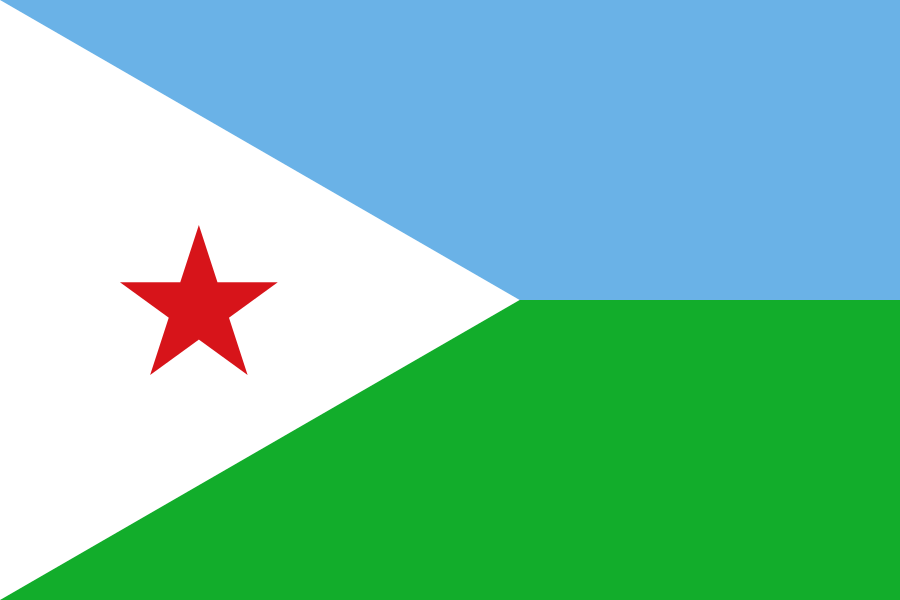
Djibouti Crime Rate & Safety
Homicide statistics, crime trends, and travel safety for Djibouti
US State Department Travel Advisory
Exercise Increased Caution
Updated March 6, 2025
Detailed homicide statistics are not currently available for Djibouti. For travelers, the US State Department currently rates Djibouti at Level 2 of 4: Exercise Increased Caution.
Homicide Rate
N/A
Safety Rank
N/A
Travel Advisory
Level 2 of 4
Data Year
N/A
Safety for Travelers
Summary of the current US State Department advisory for Djibouti:
Updated to remove Crime indicator and to include area-specific Level 3 advisory for the border with Eritrea. Exercise increased caution in Djibouti due to terrorism . Some areas have increased risk. Read the entire Travel Advisory. Reconsider travel to: Areas bordering Eritrea due to border tensions Terrorists may attack with little or no warning.
Level 1
Exercise Normal Precautions
Level 2
Exercise Increased Caution
Level 3
Reconsider Travel
Level 4
Do Not Travel
Safety Guidance for Djibouti
Practical safety information for visitors, from US State Department country information (last updated November 07, 2023).
Terrorism
Terrorist groups and those inspired by such organizations are intent on attacking U.S. citizens abroad. Terrorists are increasingly using less sophisticated methods of attack – including knives, firearms, and vehicles – to target crowds more effectively. Frequently, their aim is unprotected or vulnerable targets, such as: High-profile public events (sporting contests, political rallies, demonstrations, holiday events, celebratory gatherings, etc.
Crime
Crimes of opportunity are most common and include pickpocketing, purse snatching, theft from or of vehicles, and identity theft (by stealing credit card information). Avoid walking alone, especially after dark, and displaying cash and valuable personal property. Avoid actions that would draw attention to yourself. Dress conservatively. Drive with doors locked and windows closed. Travel with a copy of your U.S. passport and Djibouti visa to prevent the originals from being taken. Keep original documents in a secure location. Keep your credit card in your sight at all times while it is being processed. Consider using prepaid credit cards with limited funds when traveling.
Demonstrations
Demonstrations occur occasionally and sometimes without warning. They may take place in response to political or economic issues, on politically significant holidays, and during international events. Even demonstrations intended to be peaceful can turn confrontational and possibly become violent. Avoid areas around protests and demonstrations. Check local media for updates and traffic advisories.
International Financial Scams
See the Department of State and the FBI pages for information.
Victims of Crime
U.S. citizen victims of serious crimes, including victims of sexual assault, are encouraged to contact the U.S. Embassy for assistance. Report crimes to the local police by dialing 17 throughout Djibouti (French/Arabic) and contact the U.S. Embassy at +253 21-453-000 during business house and +(253) 77-877-229 after hours. Remember that local authorities are responsible for investigating and prosecuting crime. See our webpage on help for U.S. victims of crime overseas . We can: Help you find appropriate medical care Assist you in reporting a crime to the police Contact relatives or friends with your written consent Provide general information regarding the victim’s role during the local investigation and following its conclusion Provide a list of local attorneys Provide our information on victim’s compensation programs in the United States.
Domestic Violence
U.S. citizen victims of domestic violence are encouraged to contact the Embassy for assistance.
Tourism
The tourism industry is unevenly regulated, and safety inspections for equipment and facilities do not commonly occur. Hazardous areas or activities are not always identified with appropriate signage, and staff may not be trained or certified either by the host government or by recognized authorities in the field. In the event of an injury, appropriate medical treatment is typically available in the capital, Djibouti City. First responders are generally unable to access areas outside of major cities and to provide urgent medical treatment. U.S. citizens are encouraged to purchase medical evacuation insurance. See our webpage for more information on insurance providers for overseas coverage .
About This Data
Homicide figures are intentional homicides per 100,000 people, compiled by the United Nations Office on Drugs and Crime (UNODC) and published by the World Bank (indicator VC.IHR.PSRC.P5). Homicide is the most reliably comparable crime statistic across countries because definitions of other offences (assault, theft, robbery) vary widely between national legal systems and reporting practices.
Travel advisory levels are issued by the US Department of State and updated continuously. They reflect risks to travelers including crime, terrorism, civil unrest, health, and natural disasters — not only crime rates. Countries report crime data with different lags; the most recent available year is shown for each metric.
Djibouti Population & Demographics
Population of 1,168,722, growth trends, economy, and more.
Crime & Safety in Neighboring Countries



Frequently Asked Questions
Is Djibouti safe to visit?
The US State Department rates Djibouti at Level 2 of 4 (Exercise Increased Caution). Cited risks include crime.
What is the crime rate in Djibouti?
Reliable homicide statistics are not currently available for Djibouti.
What is the US travel advisory level for Djibouti?
Djibouti is currently at Level 2: Exercise Increased Caution. Advisory levels range from Level 1 (Exercise Normal Precautions) to Level 4 (Do Not Travel).