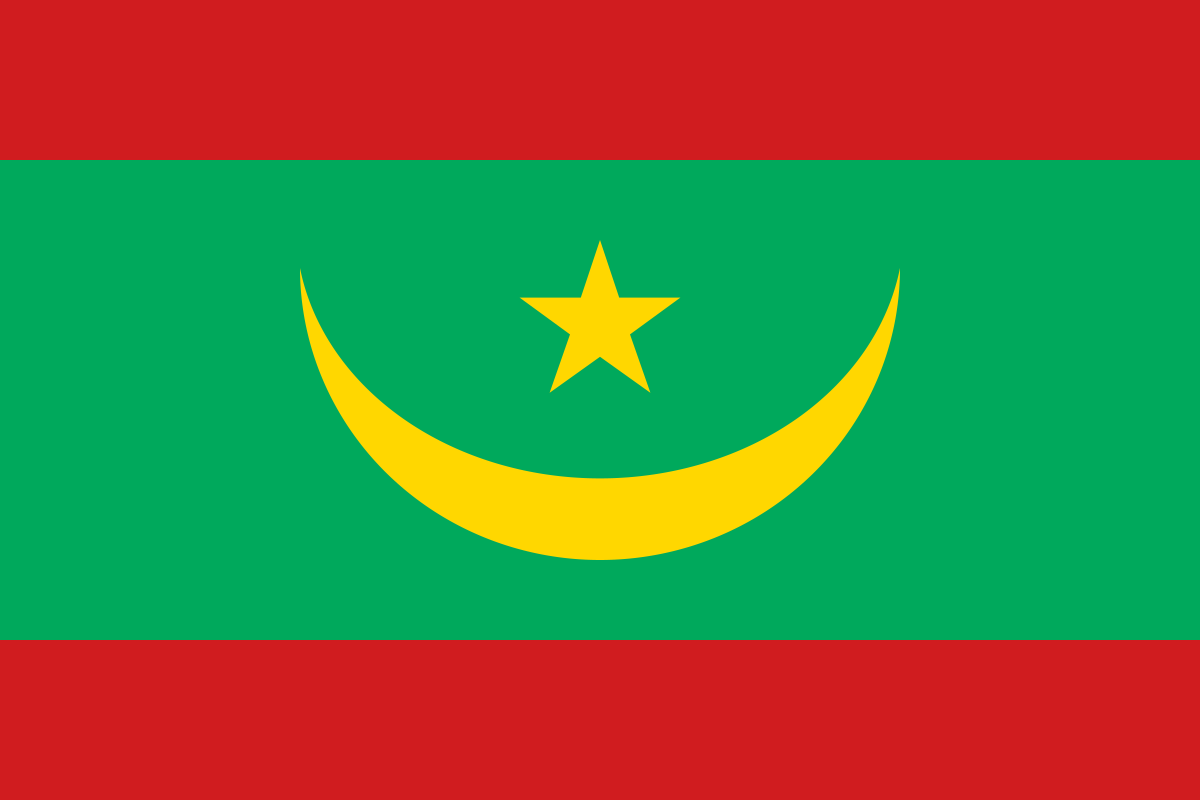
Mauritania Crime Rate & Safety
Homicide statistics, crime trends, and travel safety for Mauritania
Mauritania recorded 1.0 intentional homicides per 100,000 people in 2020, a rate that is low by global standards. That places Mauritania #150 of 195 countries by homicide rate, compared with the Africa average of 7.6 per 100,000 and a world average of 5.2. Homicide has stayed rare over the past decade (1.2 per 100,000 in 2018, 1.0 today). For travelers, the US State Department currently rates Mauritania at Level 3 of 4: Reconsider Travel.
Homicide Rate
1.0 /100k
Safety Rank
#46 of 195
Travel Advisory
Level 3 of 4
Data Year
2020
Homicide Rate Trend (2018-2020)
Intentional homicides per 100,000 people. Homicide has stayed rare over the past decade (1.2 per 100,000 in 2018, 1.0 today). Source: UNODC via World Bank.
How Mauritania Compares
Intentional homicides per 100,000 people, latest available year per country.
Armed Conflict Context
Mauritania has recorded battle-related deaths in recent years. Conflict deaths are counted separately from homicides — a country can have a moderate crime rate but significant conflict risk, and travel advisories weigh both.
Battle-Related Deaths
3(2024)
Military Spending
2.2% GDP(2024)
Safety for Travelers
Summary of the current US State Department advisory for Mauritania:
Reissued after periodic review with minor edits. Reconsider travel to Mauritania due to terrorism and crime . Some areas have increased risk. Read the entire Travel Advisory. Do Not Travel To: Areas marked off-limits by the Mauritanian military. These areas are unsafe due to security risks and terrorist activities. All areas north of the Tropic of Cancer All areas within 100 KM of the Mali and Algeria Border Country Summary: Violent crimes occur frequently outside the Tevragh Zeina neighborhoods in Nouakchott. They include mugging, armed robbery, and assault.
Level 1
Exercise Normal Precautions
Level 2
Exercise Increased Caution
Level 3
Reconsider Travel
Level 4
Do Not Travel
Safety Guidance for Mauritania
Practical safety information for visitors, from US State Department country information (last updated April 03, 2025).
Terrorism
: Terrorist groups, and individuals inspired by them, with varying degrees of allegiance to al-Qa'ida and the Islamic State of Iraq and the Levant (ISIL) operate in large parts of the Sahel and along the border with Mali. These groups remain active and may conduct attacks including the use of simpler methods like knives, guns, and vehicles to target crowds. Travel is discouraged particularly in the easternmost region of Mauritania, due to activities by terrorist groups including al-Qaida in the Islamic Maghreb (AQIM), which are active in the neighboring regions of Mali. High-profile public events (sporting contests, political rallies, demonstrations, holiday events, celebratory gatherings, etc.
Traveling safely within Mauritania
You should exercise prudence and caution when traveling in Mauritania. Be particularly vigilant when traveling by road outside of populated areas. The U.S. Embassy discourages travel outside of urban areas unless in a convoy accompanied by an experienced guide, and even then, only if equipped with sturdy vehicles and ample provisions. Nighttime driving should be avoided. Travel at night between cities in Mauritania is prohibited for U.S. Embassy staff and all driving outside of the capital of Nouakchott requires a minimum two vehicle convoy. Landmines remain a danger along the border with the Western Sahara and travelers should cross only at designated border posts.
Political concerns
Protests and political rallies occur regularly in Mauritania and can sometimes turn violent. The U.S. Embassy urges U.S. citizens to avoid political rallies and street demonstrations.
Crime
Opportunistic crime is prevalent in Mauritania. Several homes and private individuals, including U.S. citizens, have been targeted by violent criminals within the past five years. In Nouakchott, rape, armed robberies and burglaries occur at homes and busy streets in broad daylight. Some of these incidents have been violent, and the use of knives and other weapons is becoming more common. U.S. Embassy staff and their family members are prohibited from walking alone outside of designated areas and times. U.S. citizens have been victims of assaults, including sexual assaults. Given the lack of government regulation of taxi fares and poor regular maintenance, U.S. citizens should avoid taxis and public transportation. U.S. Embassy staff and their family members are prohibited from using public transportation and local taxi services.
Scams
Internet romance and financial scams are prevalent in Mauritania. Review the Department of State’s Protecting Yourself from Scams and the FBI pages for information
Technology Usage Abroad
Mobile devices can be compromised, stolen, or damaged anywhere in the world. Before traveling abroad, it is best to keep all software (operating system and apps) updated. If possible, use a virtual private network and encrypted voice over IP (VoIP) applications. Make sure that all VPN/VoIP are reputable, and U.S. based. Do not connect to unknown open Wi-Fi. GPS Navigation Apps are helpful in getting U.S. citizens around in a foreign country. Prior to using the GPS app make sure you research the route to make sure it is safe. GPS navigation app may give you the shortest route without safety consideration. Be careful when using dating apps or online dating websites while abroad. Scammers may target U.S. citizens. Tell your friends and family where you are, meet in a popular public place, and avoid consuming suspicious food or drinks. Avoid traveling alone to bars or nightclubs.
Domestic Violence
U.S. citizen victims of domestic violence may contact the Embassy for assistance.
Tourism
No formal tourism industry infrastructure is in place. Tourists are considered to be participating in activities at their own risk. Emergency response and subsequent appropriate medical treatment is not available in-country. U.S. citizens are encouraged to purchase medical evacuation insurance .
About This Data
Homicide figures are intentional homicides per 100,000 people, compiled by the United Nations Office on Drugs and Crime (UNODC) and published by the World Bank (indicator VC.IHR.PSRC.P5). Homicide is the most reliably comparable crime statistic across countries because definitions of other offences (assault, theft, robbery) vary widely between national legal systems and reporting practices.
Travel advisory levels are issued by the US Department of State and updated continuously. They reflect risks to travelers including crime, terrorism, civil unrest, health, and natural disasters — not only crime rates. Countries report crime data with different lags; the most recent available year is shown for each metric.
Mauritania Population & Demographics
Population of 5,169,395, growth trends, economy, and more.
Crime & Safety in Neighboring Countries


Frequently Asked Questions
Is Mauritania safe to visit?
The US State Department rates Mauritania at Level 3 of 4 (Reconsider Travel). The homicide rate of 1.0 per 100,000 is low by global standards.
What is the crime rate in Mauritania?
Mauritania has an intentional homicide rate of 1.0 per 100,000 people (2020, World Bank/UNODC), ranking #150 of 195 countries.
What is the US travel advisory level for Mauritania?
Mauritania is currently at Level 3: Reconsider Travel. Advisory levels range from Level 1 (Exercise Normal Precautions) to Level 4 (Do Not Travel).
How does crime in Mauritania compare to other countries?
Mauritania's homicide rate of 1.0 per 100,000 is below the world average of 5.2 and below the Africa average of 7.6.