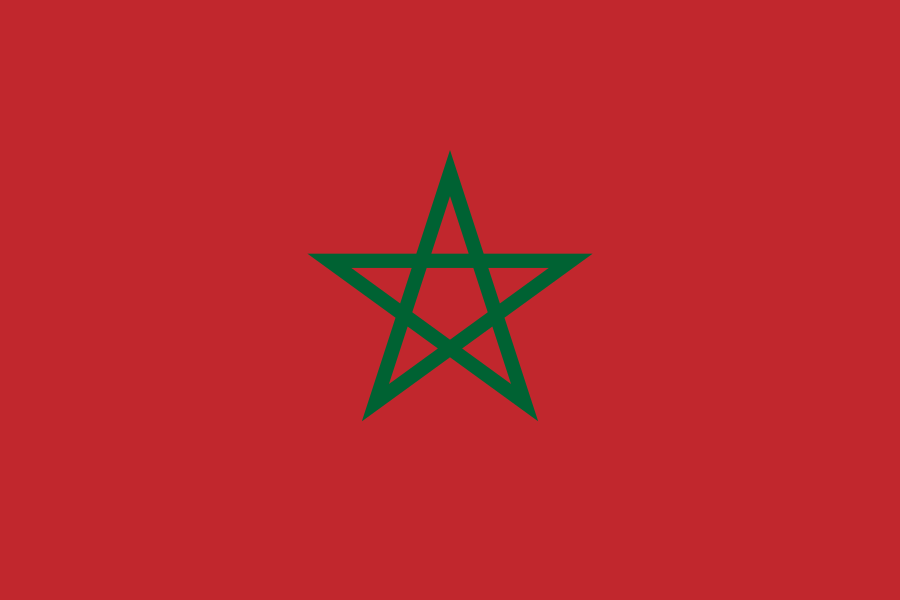
Morocco Crime Rate & Safety
Homicide statistics, crime trends, and travel safety for Morocco
US State Department Travel Advisory
Exercise Increased Caution
Updated April 21, 2025
Morocco recorded 1.7 intentional homicides per 100,000 people in 2023, a rate that is low by global standards. That places Morocco #124 of 195 countries by homicide rate, compared with the Africa average of 7.6 per 100,000 and a world average of 5.2. Homicide has stayed rare over the past decade (1.3 per 100,000 in 2013, 1.7 today). For travelers, the US State Department currently rates Morocco at Level 2 of 4: Exercise Increased Caution.
Homicide Rate
1.7 /100k
Safety Rank
#72 of 195
Travel Advisory
Level 2 of 4
Data Year
2023
Homicide Rate Trend (1990-2023)
Intentional homicides per 100,000 people. Homicide has stayed rare over the past decade (1.3 per 100,000 in 2013, 1.7 today). Source: UNODC via World Bank.
How Morocco Compares
Intentional homicides per 100,000 people, latest available year per country.
Who Is Affected
In Morocco, the homicide rate for men is 5.9× higher than the rate for women — 2.9 vs 0.5 per 100,000 (2023).
Homicide victims per 100,000 of each sex. Source: UNODC via World Bank.
Safety for Travelers
Summary of the current US State Department advisory for Morocco:
Reissued after periodic review with minor edits. Exercise increased caution in Morocco due to terrorism . Country Summary: Terrorist groups continue plotting possible attacks in Morocco. Terrorists may attack with little or no warning. They target tourist locations, transportation hubs, markets, shopping malls, and local government facilities. Read the country information page for additional information on travel to Morocco. If you decide to travel to Morocco: Stay alert in tourist spots. Avoid demonstrations and crowds.
Level 1
Exercise Normal Precautions
Level 2
Exercise Increased Caution
Level 3
Reconsider Travel
Level 4
Do Not Travel
Safety Guidance for Morocco
Practical safety information for visitors, from US State Department country information (last updated June 04, 2025).
Terrorism
Terrorist groups and individuals inspired by them are intent on attacking U.S. citizens abroad. They are using simpler methods of attack like knives, guns, and vehicles to target crowds. They often go after unprotected or vulnerable targets such as: High-profile public events (sporting contests, political rallies, demonstrations, holiday events, celebratory gatherings, etc.) Hotels, clubs, and restaurants frequented by tourists Places of worship Schools Parks Shopping malls and markets Public transportation systems (including subways, buses, trains, and scheduled commercial flights) Credible information indicates terrorist groups continue to plot potential attacks in the region, including Morocco. Lone wolf attacks can occur without warning and are difficult to detect and disrupt. Morocco is an important counterterrorism partner of the United States, and it has capable security services.
Crime
Crime in Morocco is a serious concern, particularly in major cities and tourist areas. Use common sense and the same personal security measures you would normally use in a large U.S. city or tourist destination. Do not leave bags unattended. Keep them in sight and avoid placing passports, cash, cell phones, or other valuables in the outer pockets of backpacks or purses, or on tables in public places. Do not leave bags slung over the backs of chairs, on hotel or store counters, on top of your suitcase or larger travel bag, or out of your physical control in hotel lobbies, train stations, restaurants, and other public locations. Aggressive panhandling, pickpocketing, purse-snatching, theft from unoccupied vehicles, and harassment of women are the most frequently reported issues. Criminals use weapons, primarily knives, during some street robberies and burglaries.
Demonstrations
Demonstrations occur frequently in Morocco. They typically focus on political or social issues and are rarely confrontational or violent. They may take place in response to political or economic issues. They may also occur on politically significant holidays and during international events. Demonstrations can be unpredictable, avoid areas around protests and demonstrations Check local media for updates and traffic advisories During periods of heightened regional tension, large demonstrations may take place in major cities. By law, all demonstrations require a government permit, but spontaneous unauthorized demonstrations, which have greater potential for violence, can occur. In addition, different unions or groups may organize strikes to protest an emerging issue or government policy.
Scams
Internet romance and financial scams are common in Morocco. Review the Department of State’s Protecting Yourself from Scams and the FBI pages for information. Be careful using dating apps or online dating websites while abroad. Scammers may target U.S. citizens. Tell your friends and family where you are, meet in a popular public place, and avoid consuming suspicious food or drinks. Avoid traveling alone to bars or nightclubs.
Technology Usage Abroad
Mobile devices can be compromised, stolen, or damaged anywhere in the world. Before traveling abroad, it is best to keep all software (operating system and apps) updated. If possible, use a virtual private network and encrypted voice over IP (VoIP) applications. Make sure that all VPN/VoIP are reputable, and U.S. based. Do not connect to unknown open Wi-Fi networks.
Victims of Crime
U.S. victims of sexual assault are encouraged to contact the U.S. Consulate for assistance. Report crimes to the local police at 19 from a land line or 190 from a mobile phone and contact the U.S. Consulate Casablanca at (212) 522-64-20-00. Remember that local authorities are responsible for investigating and prosecuting crime. See our webpage on help for U.S. victims of crime overseas . We can: Help you find appropriate medical care Assist you in reporting a crime to the police Contact relatives or friends with your written consent Provide general information regarding the victim’s role during the local investigation and following its conclusion Provide a list of local attorneys.
Domestic Violence
U.S. victims of domestic violence are encouraged to contact the Consulate for assistance.
Tourism
The tourism industry is generally regulated in major tourist areas. Rules about general practices and safety inspections are regularly enforced. Dangerous areas and activities are marked with signs. Trained staff are usually there to help with organized activities. If you get injured, you will likely only find appropriate medical treatment in or near major cities. Outside of major tourist areas, the tourism industry is unevenly regulated, and safety inspections for equipment and facilities are rare. Hazardous areas/activities are not always labeled properly. Staff may not be trained or certified by the host government or recognized authorities. It may take more time for first responders to reach areas outside major cities to provide urgent medical care. U.S. citizens are encouraged to purchase medical evacuation insurance.
Western Sahara
From 1975 to 1991, Western Sahara was the site of armed conflict between Moroccan government forces and the POLISARIO Front, which continues to seek independence for the territory. Tensions along the border in Western Sahara heightened in November 2020 when Moroccan forces conducted an operation on the border to clear a blockade by the POLISARIO Front; both sides have since engaged in a low intensity conflict along the border. There are thousands of unexploded mines in the Western Sahara and in areas of Mauritania adjacent to the Western Saharan border. Exploding mines are occasionally reported and have caused death and injury. There have been instances in which U.S. citizens suspected of being participants in political protests or of supporting NGOs that are critical of Moroccan policies have been expelled from, or not been allowed to enter, Western Sahara.
About This Data
Homicide figures are intentional homicides per 100,000 people, compiled by the United Nations Office on Drugs and Crime (UNODC) and published by the World Bank (indicator VC.IHR.PSRC.P5). Homicide is the most reliably comparable crime statistic across countries because definitions of other offences (assault, theft, robbery) vary widely between national legal systems and reporting practices.
Travel advisory levels are issued by the US Department of State and updated continuously. They reflect risks to travelers including crime, terrorism, civil unrest, health, and natural disasters — not only crime rates. Countries report crime data with different lags; the most recent available year is shown for each metric.
Morocco Population & Demographics
Population of 38,081,173, growth trends, economy, and more.
Crime & Safety in Neighboring Countries

Frequently Asked Questions
Is Morocco safe to visit?
The US State Department rates Morocco at Level 2 of 4 (Exercise Increased Caution). The homicide rate of 1.7 per 100,000 is low by global standards.
What is the crime rate in Morocco?
Morocco has an intentional homicide rate of 1.7 per 100,000 people (2023, World Bank/UNODC), ranking #124 of 195 countries.
What is the US travel advisory level for Morocco?
Morocco is currently at Level 2: Exercise Increased Caution. Advisory levels range from Level 1 (Exercise Normal Precautions) to Level 4 (Do Not Travel).
How does crime in Morocco compare to other countries?
Morocco's homicide rate of 1.7 per 100,000 is below the world average of 5.2 and below the Africa average of 7.6.