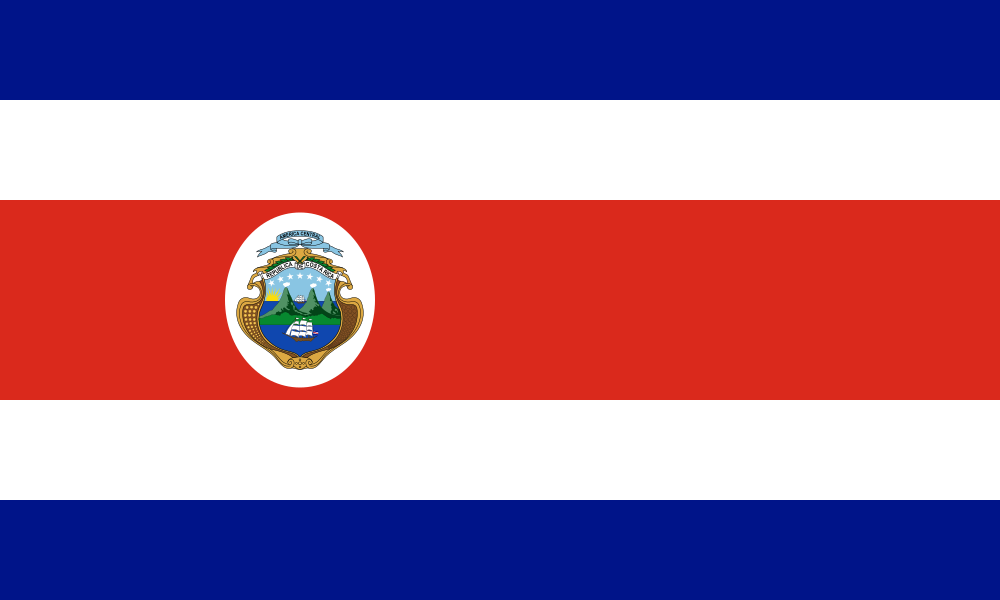
Costa Rica Crime Rate & Safety
Homicide statistics, crime trends, and travel safety for Costa Rica
US State Department Travel Advisory
Exercise Increased Caution
Updated April 2, 2026
Costa Rica recorded 17.8 intentional homicides per 100,000 people in 2023, a rate that is high by global standards. That places Costa Rica #25 of 195 countries by homicide rate, compared with the Americas average of 20.8 per 100,000 and a world average of 5.2. Homicide rates have risen 104% over the past decade (from 8.7 in 2013). For travelers, the US State Department currently rates Costa Rica at Level 2 of 4: Exercise Increased Caution.
Homicide Rate
17.8 /100k
Safety Rank
#171 of 195
Travel Advisory
Level 2 of 4
Data Year
2023
Homicide Rate Trend (1990-2023)
Intentional homicides per 100,000 people. Homicide rates have risen 104% over the past decade (from 8.7 in 2013). Source: UNODC via World Bank.
How Costa Rica Compares
Intentional homicides per 100,000 people, latest available year per country.
Who Is Affected
In Costa Rica, the homicide rate for men is 12.0× higher than the rate for women — 33.1 vs 2.8 per 100,000 (2023).
Homicide victims per 100,000 of each sex. Source: UNODC via World Bank.
Safety for Travelers
Summary of the current US State Department advisory for Costa Rica:
Exercise increased caution in Costa Rica due to crime . Advisory Summary Petty crime is common throughout Costa Rica. Violent crime, including armed robbery, homicide, and sexual assault, also affects tourists. Read the country information page for additional information on travel to Costa Rica. If you decide to travel to Costa Rica: Enroll in the Smart Traveler Enrollment Program (STEP) to get important updates and alerts from the U.S. embassy or consulate. Enrolling helps the U.S. embassy or consulate contact you or your emergency contact in an emergency.
Level 1
Exercise Normal Precautions
Level 2
Exercise Increased Caution
Level 3
Reconsider Travel
Level 4
Do Not Travel
Safety Guidance for Costa Rica
Practical safety information for visitors, from US State Department country information (last updated August 11, 2025).
Emergency numbers
Local authorities are responsible for investigating and prosecuting crimes. For the police in Costa Rica dial 911 . To contact the U.S. embassy dial +506 2519-2000 or email acssanjose@state.gov For an overview of crime in Costa Rica: Costa Rica Country Security Report (source: osac.gov )
Crime
Petty theft and pickpocketing are common crimes for U.S. travelers. More serious crimes, like sexual assault and murder, have also happened. Armed robbers often target smartphones, wallets, or purses. If someone with a weapon confronts you, don't resist. Never leave valuables unattended on the beach or in an unlocked room. Don't leave valuables in an unattended vehicle. Even a locked car in a parking area can be a target. Always check that car doors are locked, as thieves can block key fobs with jammers. Avoid walking alone in isolated areas, especially at night. Stay aware of your surroundings and keep valuables out of sight. People have reported robberies at isolated rental properties. Ensure your rental has good security and lock all doors and windows. Review the Department of State and the FBI pages for information on international financial scams.
Victims of crime
The Costa Rican Investigative Police (OIJ) is responsible for investigating and prosecuting crime. But they will only act if the victim files a police report (denuncia). For the local police dial 911 For the United States Embassy (after contacting local authorities) dial +506 2519-2000 To file a police report (denuncia): Visit the local office of the OIJ (Investigative Police.) You can find the closest location through the OIJ app ‘OIJ CR Safe.’ In the following locations, Tourist Police can provide limited assistance to start the process: San Jose city office – Central Park Airports Puerto Viejo Beach Cahuita Beach Tamarindo Beach Brasilito Beach Flamingo Beach Nosara Beach Santa Teresa Beach Dominical Beach El Coco Beach Visit our webpage on help for U.S. victims of crime overseas .
Victims of sexual assault
For the police dial 911 To contact the U.S. embassy dial +506 2519-2000 or email acssanjose@state.gov
Victims of rape
To contact the U.S. embassy dial +506 2519-2000 or email acssanjose@state.gov For local law enforcement assistance and to start Costa Rica’s support protocol dial 911 The protocol includes time-sensitive medical treatment and evidence collection. The Department of State provides help for U.S. victims of crime overseas . U.S. Embassy in San Jose can: Replace a stolen or lost passport. Help you find appropriate medical care. Assist you in reporting a crime to the police. Contact relatives or friends with your written consent. Provide general information about the victim’s role during local investigation and following its conclusion. Share a list of local attorneys (does not imply endorsement). Inform you of victim’s compensation programs in the U.S. Issue an emergency loan for repatriation to the U.S. and/or limited medical support in cases of destitution.
Beach safety
Rip currents in Costa Rica are very dangerous. They are responsible for several drownings of U.S. tourists each year. Most beaches do not have lifeguards or warnings about unsafe conditions. Do not swim alone or dive into water of unknown depth. Avoid alcohol while swimming. Do not walk alone or go into the water at night. For water sports, only take lessons or rent equipment from certified tour companies. Ask your hotel or host about beach safety before you go. All beaches in Costa Rica are open to the public. You should not leave valuables unattended while you go into the water. Double check that your car is locked. Thieves often use signal blockers to prevent your key fobs from working. Costa Rican authorities have lifeguard presence at the following locations. These stations, however, may be far apart, poorly equipped, and with limited visibility.
Pacific Coast
Manuel Antonio Beach Caldera Beach Esterillos Oeste Beach Bahia Ballena Beach Ventanas Beach Tamarindo Beach
Caribbean Coast
Cocles Beach Manzanillo Beach Negra Beach (Limon) Punta Uva Beach Further resources on beach safety and rip currents: The Oceanographic Information Module NOAA National Weather Service's Rip Current Toolkit
Tourism
The tourism industry is regulated, and rules are enforced. Inspections take place on a regular basis, but some tour operators are not registered. Dangerous areas or activities are not always marked with signs. Medical treatment is available, but traffic and road conditions can delay access to remote areas. U. S. citizens should consider medical evacuation insurance . The Costa Rica Tourism Institute (ICT) has a list of Certified Tour Guides . ICT also has safety and security information in these English and Spanish language pamphlets.
Adventure sports
Some tour operators may not follow international standards and best practices. Be careful when doing adventure activities such as hiking, rafting, zip lining, or sky diving. U. S. citizens have died in Costa Rica while doing adventure sports. Make sure your medical insurance covers your sport. The Ministry of Health maintains a list of approved adventure sports operators . Do not do adventure sports alone. Always carry ID and let others know where you are. Before kayaking and rafting, check river conditions and wear a life jacket and helmet. Even popular rafting spots can become dangerous in flash floods. Carry a first aid kit and know where the nearest rescue center is. Follow all local or park rules and be careful in unknown places.
About This Data
Homicide figures are intentional homicides per 100,000 people, compiled by the United Nations Office on Drugs and Crime (UNODC) and published by the World Bank (indicator VC.IHR.PSRC.P5). Homicide is the most reliably comparable crime statistic across countries because definitions of other offences (assault, theft, robbery) vary widely between national legal systems and reporting practices.
Travel advisory levels are issued by the US Department of State and updated continuously. They reflect risks to travelers including crime, terrorism, civil unrest, health, and natural disasters — not only crime rates. Countries report crime data with different lags; the most recent available year is shown for each metric.
Costa Rica Population & Demographics
Population of 5,129,910, growth trends, economy, and more.
Crime & Safety in Neighboring Countries

Frequently Asked Questions
Is Costa Rica safe to visit?
The US State Department rates Costa Rica at Level 2 of 4 (Exercise Increased Caution). Cited risks include crime. The homicide rate of 17.8 per 100,000 is high by global standards.
What is the crime rate in Costa Rica?
Costa Rica has an intentional homicide rate of 17.8 per 100,000 people (2023, World Bank/UNODC), ranking #25 of 195 countries.
What is the US travel advisory level for Costa Rica?
Costa Rica is currently at Level 2: Exercise Increased Caution. Advisory levels range from Level 1 (Exercise Normal Precautions) to Level 4 (Do Not Travel).
How does crime in Costa Rica compare to other countries?
Costa Rica's homicide rate of 17.8 per 100,000 is above the world average of 5.2 and below the Americas average of 20.8.